Dragons in Game of Thrones
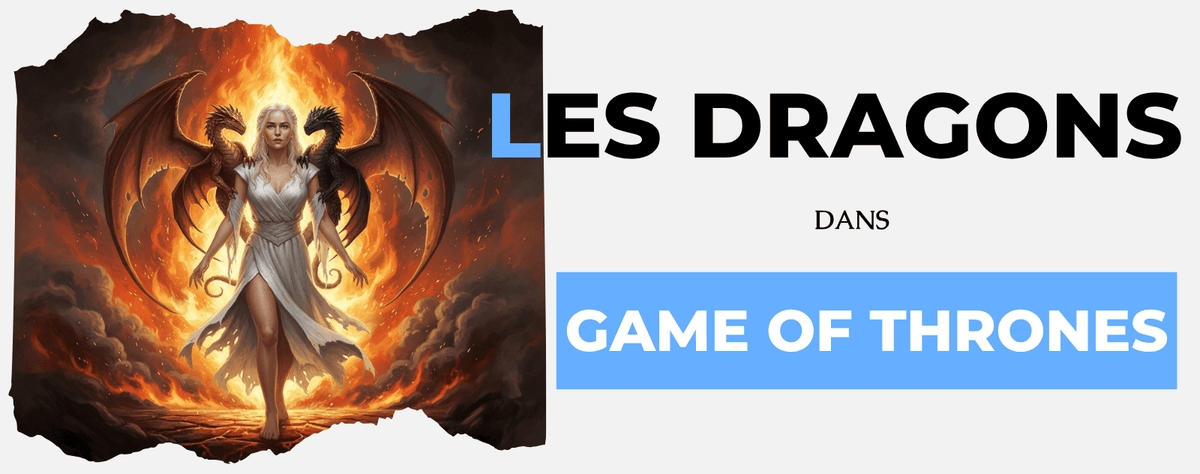
Under the scorching skies of Westeros, dragons make cities tremble and reshape the destinies of kingdoms. Their immense wings obscure the sun, their roars resonate like war drums, and their breath sets battlefields ablaze. But beyond the terror and awe they inspire, the Game of Thrones dragon is above all a symbol: a legacy of Valyria, an embodiment of Targaryen power, a reflection of the saga's themes.
In this article, let's dive into the flames of fantasy to discover the secrets of these creatures: their names, their power, their forgotten history, and what they represent in the collective imagination.
What are the names of the dragons in Game of Thrones?
Daenerys Targaryen's three dragons, born from her petrified eggs, bear names heavy with meaning:
-
Drogon , the greatest and fiercest, named in memory of Khal Drogo.
-
Rhaegal , with green and bronze scales, named after Rhaegar Targaryen, Daenerys' brother.
-
Viserion , in ivory and gold hues, named in memory of Viserys, his younger brother.
These names are more than a tribute: they recall Daenerys' pain, love, and loyalty, and mark the link between her tragic past and her imperial destiny.
All the dragons in Game of Thrones and the history of Westeros
While the Game of Thrones series only reveals three dragons – Drogon, Rhaegal, and Viserion – the expanded universe of Westeros and historical accounts mention dozens. Each bears an evocative name and a tragic destiny, reinforcing the mythological dimension of these creatures.

The first legendary dragons
Long before the Conquest of Westeros, dragons like Urrax , Nagga , and Terrax appeared in the tales of the Age of Heroes. Their existence straddled the line between myth and reality, but they already left their mark on the imagination of the people.
The dragons of Valyria and Targaryen blood
With the arrival of the Targaryens, the dragon line took on a historical and political form. The most famous are:
-
Balerion the Black Terror , ridden by Aegon the Conqueror, capable of melting entire citadels.
-
Meraxes and Vhagar , ridden by his sisters Rhaenys and Visenya.
-
Vermithor , Silverwing , Meleys or Caraxes , dragons of the Dance, a period when the skies of Westeros were ablaze with draconic battles.
The dragons of the Dragon Dance
This fratricidal conflict between Targaryens saw an impressive variety of dragons clash:
-
Syrax and Caraxes , ridden by Rhaenyra and Daemon Targaryen.
-
Sunfyre , Tessarion , Seasmoke , Meleys , Arrax , Vermax , Tyraxes , each linked to a Targaryen branch or ally.
-
“Wild” dragons like Sheepstealer , Grey Ghost or the Cannibal , never fully tamed.
The Dance saw most of these creatures perish, often in titanic battles like that of the Eye of the God (Vhagar against Caraxes).

The End of the Dragons
After the civil war, only a few dragons survived, growing smaller and sicklier each time. The last known dragon died around the year 153, marking the end of the dragon age… until Daenerys's eggs hatched.
| Name | Sex | Color / Description | Rider(s) / Status | Birth / Period | Death / Fate & Notes |
|---|---|---|---|---|---|
| Urrax | Unknown | Unknown | — | Age of Heroes (legendary) | Mentioned in the tales of the Age of Heroes (legend) |
| Nagga | Female | Unknown | No known riders | Age of Heroes (legendary) | Legendary Dragon (Age of Heroes) |
| Terrax | Unknown | Unknown | Jaenara Belaerys (associate) | Before the Doom of Valyria (birth ≤ -114; active until -102) | Deceased no later than -102 / active before the Scourge |
| The Cannibal | Male | Black, green eyes | Never mounted | Born before -114 (before the Targaryen exile) | Missing/mentioned between 131–153 (after the Dance of the Dragons) |
| Balerion (the Black Terror) | Male | Black | Aegon I, Maegor I, Aerea, Viserys I (in stages) | Active adult ≤ -114 (before the Targaryen exile) | Died of old age in 1994 (last recorded) |
| Meraxes | Female | Silver and gold | Rhaenys Targaryen | Active between -114 and -52 | Killed in 1910 (at Denfert) by a scorpion sting in the eye |
| Vhagar | Female | Bronze with blue-green highlights | Visenya Targaryen; later Baelon, Laena Velaryon, Aemond | Born ≈ -52 (aged 181 years at her death) | Killed in 130 (by Caraxes during the battle on the Eye of the God) |
| Quicksilver | Female | White / silver (probable) | Aenys I; Aegon (son of Aenys) | 10 | Killed in 43 by Balerion during the battle under the God's Eye |
| Caraxes | Male | Blood red | Aemon Targaryen; Daemon Targaryen | 55 | Killed in 130 by Vhagar during the battle on the God's Eye |
| Grey Ghost | Male | Pale grey | Never mounted | — (unknown) | Killed in 129 by Sunfires |
| Meleys | Female | Scarlet red | Alyssa Targaryen; Rhaenys (the Queen Who Was Never) | Born between the Conquest and -2/75 (≈) | Killed in 129 by Sunfires and Vhagar during the siege of Raven's Rest |
| Sunfyre | Male | Gold and pale pink | Aegon II Targaryen | 107 | Died in 130 from wounds sustained against Danselune |
| Dreamfyre | Female | Pale blue and silver | Rhaena Targaryen; Helaena Targaryen | 23 (at Dragonstone) | Killed in 130 (collapse of the dome during the sack of Dragonpit) |
| Syrax | Female | YELLOW | Rhaenyra Targaryen | 97 | Killed in 130 (rioter during the sack of Dragonpit) |
| Arrax | Male | Unknown | Lucerys Velaryon | 115 | Killed in 129 by Vhagar above Shipwreckers' Bay |
| Tyraxes | Male | Unknown | Joffrey Velaryon | 117 | Killed in 130 (rioter during the sack of Dragonpit) |
| Vermax | Male | Unknown | Jacaerys Velaryon | 114 | Killed in 129 (crossbow bolt to the eye or grappling hook) during the Battle of the Gorsier |
| Stormcloud | Male | Unknown | Aegon III Targaryen | 120 | Killed in 129 (scorpion sting to the neck during the Battle of Gosier) |
| Silverwing | Female | Unknown | Alysanne Targaryen; Ulf the White (dragonseed) | 036 | Disappeared/died between 136–153 (between her last appearance and the end of the dragons) |
| Morning Point | Unknown | Pink and black | Rhaena Targaryen | 131 (juvenile, just before the end of the Dance) | Disappeared/killed between 131–153 (between the end of the Dance and the death of the last dragon) |
| Sheepstealer | Male | Brown | Nettles (dragon seed) | Birth ≈ 34/43 (youth of Jaehaerys I) | Disappeared/killed between 135–153 (after last appearance) |
| Morghul | Male | Unknown | Never mounted (promised to Jaehaera Targaryen) | 123 | Killed in 130 (rioter during the sack of Dragonpit) |
| Shraikos (Shrykos) | Female | Unknown | Never ridden (promised to Prince Jaehaerys) | 123 | Killed in 130 (rioter during the sack of Dragonpit) |
| Danselune (Moondancer) | Female | Pale green and pearl white | Baela Targaryen | 116 | Killed in 130 by Sunfires during the fall of Dragonstone |
| Seasmoke | Male | Grey and white | Laenor Velaryon; Addam Velaryon (seed) | Around the year 94 | Killed in 130 by Vermithor during the Second Battle of Chutebourg |
| Vermithor | Male | Brown and bronze | Jaehaerys I Targaryen; Hugh Hammer (seed) | 034 | Killed in 130 (by Fumée-des-Mers and Tessarion during Chutebourg) |
| Tessarion | Female | Cobalt blue and light bronze | Daeron Targaryen | 114 | Killed in 130 (by Billy Burley during the Second Battle of Chutebourg) |
| The Last Dragon (name unknown) | Female | Green | No known riders | Between 136 and 153 (after the Dance of the Dragons) | The last witnesses saw her alive; she died around 153 (end of the Draconic era). |
Which is the most powerful dragon in Game of Thrones?
In the series, Drogon is unrivaled. His colossal size, brute strength, and close bond with Daenerys make him a living weapon feared by all. He is the modern-day equivalent of Balerion the Black Terror , whose shadow could loom over an entire city.
In the history of Westeros, Balerion remains the absolute reference: he melted the Iron Throne with his breath and his name alone was enough to sow terror.

What is Daenerys's biggest dragon?
Unsurprisingly, Drogon . As the seasons progress, his growth is meteoric, far surpassing his brothers. He becomes the ultimate survivor, the true heir to the age of dragons. His black scales, red eyes, and intelligence make him much more than a monster: a partner, almost Daenerys's alter ego.

Which dragon does Daenerys lose?
Fate strikes cruelly:
-
Viserion is slain by the Night King and resurrected as an ice dragon, serving the darkness.
-
Rhaegal is killed instantly by Euron Greyjoy's scorpions.
These losses are not just military defeats: they symbolize the fragility of Daenerys' dream and the pain of a crumbling legacy.

Which dragon laid Drogon's egg?
The mystery remains. Daenerys' eggs come from distant Valyria, a land destroyed by the cataclysm. Some fans believe they could be descended from long-extinct dragon lineages. The author deliberately maintains this veil of mystery, reinforcing the mythical aura surrounding Drogon and his brothers.
Why does Daenerys have three dragons?
Three is a symbolic number. In the Targaryen dynasty, it recalls Aegon and his two sisters, riders of the three dragons of the Conquest. In fantasy, three embodies balance, magic, and destiny. With Drogon, Rhaegal, and Viserion, Daenerys perpetuates this legacy, inscribing her lineage in prophecy and legend.

Dragons in the history of Westeros
Long before Daenerys, dragons ruled the skies under the Valyrian banner. They were weapons of conquest and guarantors of the empire. After the Fall of Valyria, only the Targaryens retained a few, leading to the Conquest of Westeros.
But over generations, the dragons declined. Their descendants, confined and domesticated, grew smaller until they almost completely disappeared. The hatching of Daenerys's eggs thus marks a rebirth , a reminder that the magic and fire of olden times never truly die.

Characteristics and symbolism of dragons
-
Morphology : immense leathery wings, body covered in scales, mouth capable of spewing devastating fire. Their growth appears to have no known limit.
-
Powers : breath of fire, great intelligence, empathic bond with their rider.
-
Symbolism : embodiment of power, heritage, and magic. They are both shadow and light: destructive yet bearers of renewal.
In Game of Thrones, they are not just weapons. They reflect the choices of their riders, and their loyalty or loss marks the tragic turning points of the story.

Dragons in modern fantasy
Beyond Westeros, the Game of Thrones dragon has become a cultural icon. Its dark and realistic aesthetic has influenced generations of fans.
For enthusiasts, integrating this fascination into their daily lives can take several forms:
-
Collecting a Drogon dragon figurine is a reminder of the majesty of the saga.
-
Decorate your space with Targaryen symbols to bring the spirit of dragons to life.
-
Imagine stories in the fantasy universe, drawing inspiration from these mythical creatures.
Conclusion: Heritage and eternal flames
The dragons of Game of Thrones are not simply creatures of war. They embody legacy, pain, and hope. Drogon, the last survivor, carries with him in his flight the memory of a bygone age.
If this draconic journey has fascinated you, also check out our article on dragons in Harry Potter , where magic takes on other captivating forms.