Ultimate Guide: The Komodo Dragon

In this article about the Komodo dragon , we will try to unravel as many mysteries as possible concerning this famous monitor lizard. We will answer a multitude of questions about it, such as:
- Its origins
- His physique
- Its dangerousness
The Komodo dragon remains one of the most fascinating and fantastic living creatures of our time; discover it through our "Ultimate Guide." Enjoy your reading.
Who is the Komodo dragon?
They are as charismatic as orangutans, tigers, or pandas, but the future of Earth's largest lizard is uncertain. The Komodo dragon ( Varanus komodoensis ) is the largest lizard species on the planet; this reptile belongs to the Varanidae family. Also called the Komodo monster or Komodo monitor , it is found on Komodo Island and near some of the Lesser Sunda Islands (Insulindia archipelago) in central Indonesia. 🦎
By the way, as a side note, if you're a big fan of Dragons in general, check out our Dragon Shop, you'll find items like the rings below.

Popular interest in the large size and predatory habits of this particular lizard has allowed this endangered species to become an ecotourism attraction, which has thankfully encouraged its protection. However, according to the International Union for Conservation of Nature (IUCN), the Komodo dragon is currently in a "vulnerable" conservation status. 😭

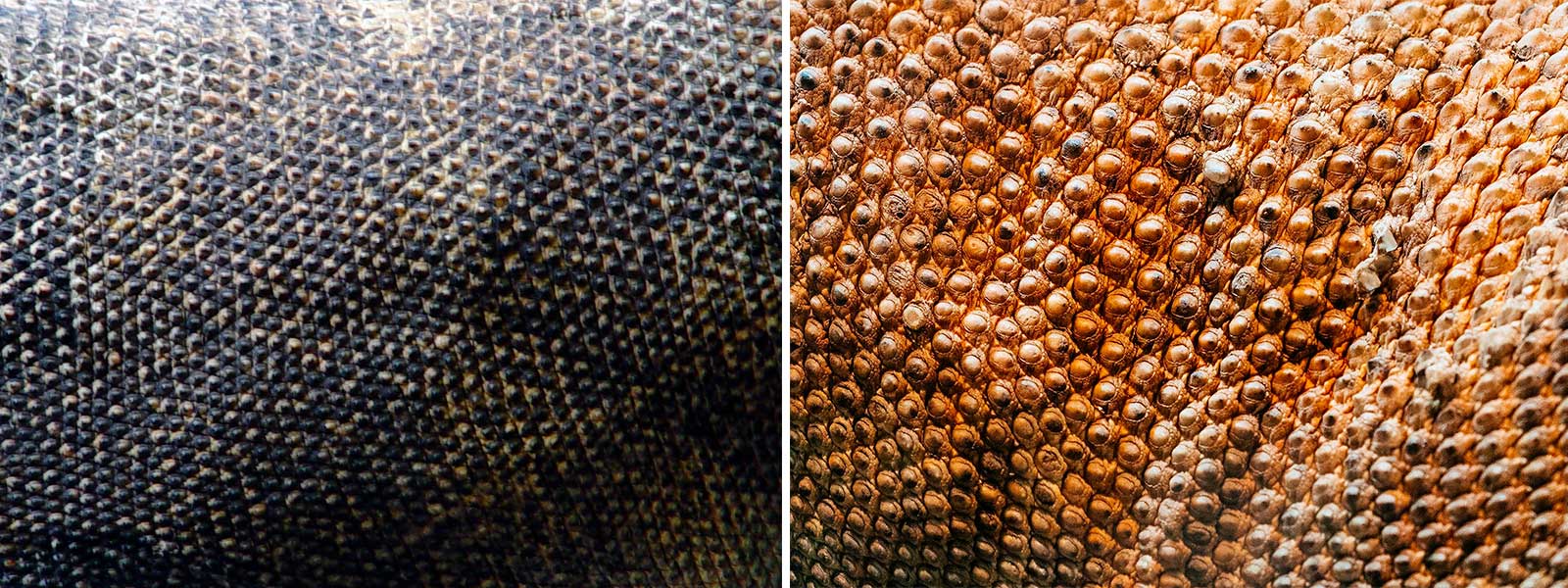
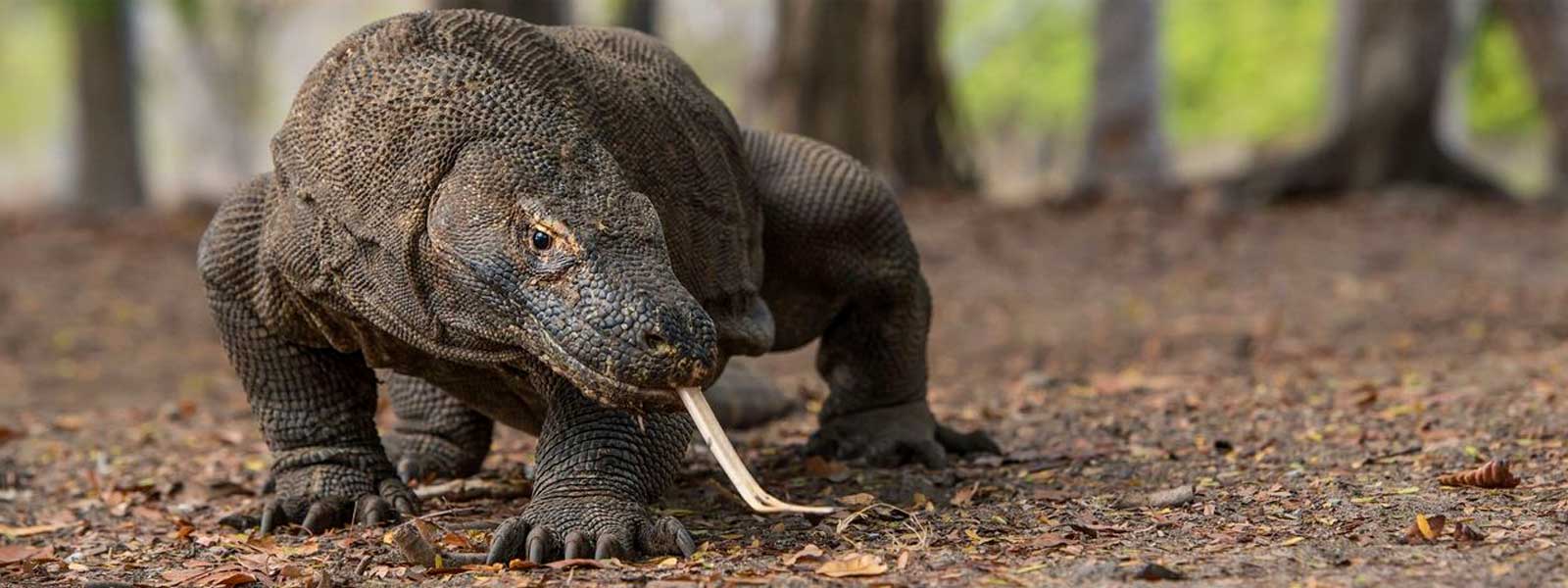
These large lizards range in color from black to yellowish-gray, depending on their location, and have rough, durable skin reinforced by osteoderms (bony plates) that protect them from scratches and bites. The Komodo dragon also has a large, muscular tail and long, powerful claws. It reminds us of mythical fire-breathing dragons. 🔥
What are the origins of the Komodo dragon?
Where did they come from? Although they're famous for inhabiting the Indonesian island of Komodo and the surrounding islands, the Komodo dragon actually originated in Australia. According to fossils, Komodo dragons migrated from Australia to the islands of Indonesia, arriving on the island of Flores around 900,000 years ago. Paleontologist and environmentalist Tim Flannery believes the Komodo dragon disappeared from Australia around 50,000 years ago, a disappearance that coincides with the arrival of humans on the continent. 🌴

What is the habitat of the Komodo dragon?
What is their habitat like? They are quite rare creatures and are found in the wild only on five islands: Komodo Minor Probe, Rinca, Gili Montang, and Gili Dasami, all located in Komodo National Park , and on Flores Island , where they roam freely. They are able to thrive in conditions unsuitable for other creatures or humans. Many of them are kept in captivity, in zoos, because they attract large crowds. 🤓

The Komodo dragon's habitat must be arid for it to thrive. It can live in forests or open savannas and does best in temperatures that hover around 40 degrees Celsius daily. The area where this lizard lives in the wild is dry year-round, except during the monsoon season. These reptiles need water to survive and have the ability to store water when it rains or when they enter the water to swim. When their bodies become too hot, they excrete salt instead of water. 🦎
Komodo Dragon Population
There are approximately 6,000 Komodo dragons alive at this time. Their populations are confined to the islands of Indonesia's Lesser Sunda archipelago, including Komodo (1,700), Rinca (1,300), Gili Motang (100), and Flores (possibly 2,000), according to estimates by the World Animal Foundation. Komodo dragons made their first appearance outside of Indonesia in 1992 at the National Zoo in Washington, D.C. The zoo reports that four litters hatched, and 55 offspring now live in more than 30 zoos worldwide. 🐉

Physical Characteristics of the Komodo Dragon
Komodo Dragon Skin Color
- Adults are grey or clay-colored; juveniles are more colourful, with lighter, mottled skin.
- The females and males are similar in color, although the females have more red on their flanks.
- Their yellow, forked tongue is one of their specific characteristics.
Komodo Dragon's sense of smell
- This is its primary food detector; it can spot carrion up to a distance of 5 km.
- Odor particles from the air are collected by the forked tongue and brought to the palate (Jacobson's organs) where signals are generated and sent to the brain.
Vision of the Komodo Dragon
- The retinas only have cone cells that can detect color, but are weak in dim light.
- It can see up to a distance of 300 meters. Very useful for hunting to detect the movements of its targets.

Komodo Dragon Audition
- The Komodo dragon is not deaf, but it does not depend as much on sound as on smell.
- It can only hear a narrow range of frequencies.
How big is a Komodo dragon?
The Komodo dragon can reach a total length of 3 meters (the average is 2 meters). Females are smaller, measuring up to 1.8 meters long. These measurements are based on data collected in captivity. The Komodo dragon's physical characteristics are impressive. Among the 5,600 species of lizards, the Komodo dragon is the largest in the world. Due to its size and aggressive nature, many cultures have stories and legends about it. The Komodo dragon's size plays a major role in the food chain. 🦎

These reptiles (not extinct) are among the most spectacular in terms of size, and they still exist in the world today. They are so large that they are known as mythical giants. These impressive creatures are unique in many ways. However, the Komodo dragon's size is certainly its most striking physical characteristic. At full maturity, when standing on its hind legs, its height far exceeds the average human height (1.71 meters). Furthermore, they dominate the ecosystems they inhabit thanks to their imposing size. 🐲
How much does a Komodo dragon weigh?
With an astonishing average weight of 70 kg, these lizards are veritable monsters. This makes the Komodo dragon slightly heavier on average than humans (though well below the US average of 88.8 kg). They are therefore much larger than other lizards, which weigh around 15 kg. These enormous weights are just averages. The largest Komodo dragon reliably measured weighed 166 kg! That's more than the weight of a standard refrigerator. Males tend to grow larger and bulkier than females. Hatchlings weigh less than 100 grams. Their first few years are precarious, and they are often preyed upon, especially by other Komodo dragons. By age 5, they weigh around 25 kilograms. At this point, they begin hunting larger prey. They continue to grow slowly throughout their lives. 🦎

The Komodo dragon's weight is sometimes reported to be even higher than that. This is due to another amazing ability of the Komodo dragon: their stomach expands easily when they eat. This allows them to consume up to 80% of their body weight in one meal! Imagine nearly doubling your weight after eating a large Christmas dinner. This extreme weight gain slows them down considerably. Consequently, they vomit the contents of their stomach when threatened. This allows them to quickly escape predators if necessary. It's a way of managing a feeding coma. The Komodo dragon is not only large but also muscular. This contributes to their massive weight, although they are definitely the largest lizards in terms of weight. 🐉
Is Komodo dragon venom deadly?
The team from the YouTube channel "Animal Planet" observes Komodo dragons hunting in the wild during a visit to Rinca Island in Indonesia. They then demonstrate the effect of the powerful venom on a piece of raw meat; the experiment takes place at 5 minutes and 25 seconds . The goal is simple: to compare the bacteria and toxins present in a human mouth to those of the reptile. After a bite, these bacteria and toxins will settle and contaminate the meat for up to three days. The result is shockingly lethal. 😱
The Komodo dragon is one of the few lizards with a venomous bite . These stealthy and powerful hunters rely on their sense of smell to locate food, using their long, forked tongues to sample the air and detect odors and flavors. Each end of the tongue captures molecules belonging to the prey and transfers them to a sensory organ in the mouth, which will mark the path to follow. 🦎
Another reason these creatures are so fascinating is that they are immune to their own poisons . The reason for this is unknown, but members of their species are protected against the venom of their own kind. Scientists are investigating the possibility of finding antibodies in Komodo dragon blood that could be responsible. Komodo dragon saliva is toxic ; its prey often dies from its wounds, and even if it manages to escape despite the bite, it often succumbs to infection. 😵

The Komodo dragon is thought to have evolved from large reptiles of the genus Varanus, which roamed the Earth more than 200 million years ago. Many experts wonder why this species is one of only two that produce venom . They rarely need to directly capture live prey, as their toxic bite releases toxins that inhibit blood clotting.
Some herpetologists point out that the physical trauma of the bite and the introduction of bacteria from the Komodo dragon's mouth into the wound also play a role in the prey's decreased vitality and death. Because they are not in a hurry once the toxin is injected, Komodo dragons often find their prey dying or shortly after death.

Its venom, among other things, lowers blood pressure, with some compounds being as potent as those found in the most venomous snake, the Taipan (Western Australia). A Komodo dragon's venom seeps into the wounds it inflicts on any unfortunate animal it attacks. The animal may escape the dragon's grasp, but it will not escape the venom, which will eventually kill it.
The power of a Komodo dragon's bite
We know the Komodo dragon is a robust and powerful beast, and in the video below, Steve Backshall (an English naturalist) is on a quest to add a reptile to his list of the "60 Deadliest Predators" in the world. And what better place than Indonesia to find the largest lizard on the planet? He'll use a device to measure the Komodo dragon's jaw strength, ultimately determining how dangerous its bite is. The experiment begins at 1 minute and 25 seconds . 🦎
Steve is interested in the Komodo dragon's bite force , as lizards, in general, are not known for the power of their jaws. He decides to measure his own bite force first to have a point of comparison between himself and the lizard; the result is 8.4 kg/cm². ⚖
The Komodo dragons wereted no time. Curious and hungry, drawn by the scent of blood emanating from the meat, they eagerly tore at the measuring device. Steve highlighted their tails, which he likened to a baseball bat, suggesting they could serve as defensive weapons. At 2 minutes and 48 seconds, one of the Komodo dragons demonstrated this on one of its companions. He was very impressed by the result: the reptile's jaw strength of 42 kg/cm², surpassing that of a human five times.

Komodo Dragon Attack
The Komodo dragon has an incredible sense of smell. Experts estimate they can smell up to six kilometers away if the wind is blowing in the right direction, allowing them to easily find their prey. The combination of their speed, powerful teeth, and infallible venom means they are almost always victorious. They can run fast and, on occasion, attack and kill humans. They often wait along well-trodden paths to ambush passing pigs, deer, and cattle. 🐮

Komodo dragons have excellent eyesight; they can spot their prey from up to 300 meters away. They are also very fast, though they don't need to be. Despite their robust appearance, they can briefly reach speeds of 20 km/h. But they prefer to hunt stealthily, waiting for hours for their prey to cross their path. They are very patient animals, and their victims often fall victim to their attacks. The video below is a perfect example of the Komodo dragon's determination; viewer discretion is advised. 🐉
The Komodo dragon is believed to have inspired the creation of the iconic movie monster Godzilla . They are known to fight to establish dominance or attract females. And while they generally prefer deer for dinner, they are also known to attack and eat humans, as well as other large animals, such as monkeys. 🐒
Is the Komodo dragon a threat to humans?
Komodo dragons have shark-like teeth and a toxic venom that can kill a person within hours of a bite. Yet, the villagers who have lived for generations (on Komodo Island) alongside the world's largest lizard weren't afraid, until the dragons began attacking. Stories quickly spread throughout this small tropical archipelago in southeastern Indonesia, the only place where the endangered reptiles can still be found in the wild. Two people were killed in 2007, a young boy and a fisherman, and others were seriously injured after being attacked without provoking the lizards. 🦎

Komodo dragon attacks are still rare, experts note. But fear is swirling in fishing villages, along with questions about how best to live with the dragons in the future. A 46-year-old park ranger was doing paperwork when a dragon slithered up the stairs of his wooden hut in Komodo National Park and attacked his ankles, which were lying under the desk. When the ranger tried to pry open the beast's powerful jaws, it sank its teeth into his hand, he said. 🖐🏼
"I thought I wouldn't survive... I've spent half my life working with Komodo dragons and I've never seen anything like this," the man said, showing his jagged gashes, stitched with 55 stitches and still swollen three months later. "Luckily, my friends heard my cries and got me to the hospital in time." It's safe to assume that the Komodo dragon's behavior is quite unpredictable; it's a born hunter and predator, and due to its physical abilities, it doesn't hesitate to attack prey larger than itself. If you find yourself in its presence, or at least not very close, stay alert and keep a safe distance. ⚠️

What does the Komodo Dragon eat?
In summary, the Komodo dragon's diet is rich and varied, including wild pigs, goats, deer, and water buffalo. In the wild, it has also been observed eating other, smaller dragons. They are known to sometimes eat humans and human corpses. More than a dozen human deaths have been attributed to bites in the last century, although there are reports of survivors of the resulting septicemia. Few people survive to tell how they escaped the Komodo dragon. 🦎

As you've probably guessed, its favorite food, being a carnivore, is meat. It can consume the equivalent of 80% of its body weight in meat, which is incredible compared to a human. It's best not to cross its path and not to underestimate it. 🍗 In the food chain, the only being above it that can pose a mortal threat is a human. 🤔 In addition to hunting large mammals, the Komodo dragon feeds on its own species, cannibalizing the young. In captivity, Komodo dragons eat rodents, chicks, and rabbits. Occasionally, they consume fish and beef carcasses.
Komodo Dragon and Reproduction
The Komodo dragon is a solitary animal that lives in isolation, except for mating, which occurs occasionally during the dry season, between May and August (the only time you might have the chance to witness the fierce battles between rival males). Males compete with each other for the opportunity to mate with females. The female will typically develop a visually enlarged abdomen and begin emitting pheromones that act as signals to males. 🦎💘🦎
A couple during their lovemaking; I think they lack a bit of privacy. 💕
How does mating occur between Komodo dragons?
During the Komodo dragon's mating season, large dominant males fight intensely for females and territory. This often happens when they gather around a carcass to feed. Blood is usually spilled, and the loser will either flee or freeze to death as a sign of surrender. Before the mating season, a number of female eggs develop yellow in a process called vitellogenesis. Did you know that Komodo dragons are famous for their loyalty? They are known to form strong pair bonds and even remain monogamous with their partners, which is rare among lizard species. 😍

As with many reptiles, the number of female Komodo dragons that nest each year often changes, depending on prey availability and the female's physical condition. In the wild, females do not reproduce every year. During these "resting" years, they recover the energy their bodies expend producing eggs during their fertile years.
Baby Komodo Dragon
At birth, baby Komodo dragons are only 30 centimeters long. As soon as they hatch, the young flee and climb trees to avoid being eaten by their mother or other Komodo dragons. Life is not easy for a young Komodo dragon. Indeed, the adults see the babies as easy prey. Fortunately for the babies, the adults are too heavy and clumsy to climb trees.
At the age of four and about 1.2 meters (4 feet) tall, young Komodo dragons descend to the ground and live there, according to the San Diego Zoo. Those that survive can expect a long life. A Komodo dragon has an average lifespan of 30 years. The eggs are incubated for seven to eight months and hatch in April of the following year, when insects are plentiful. About 20 eggs are laid in September and deposited in abandoned megapode nests: medium-sized, stocky, bird-like chickens with small heads and large feet. 👶🏼

The mother of the newborns will also try to protect her future offspring from potential dangers. She will create false nests to lure and deceive potential predators and keep her eggs safe. Then, the incubation of her Komodo dragon eggs, which are about the size of a grapefruit, will last approximately three months. This group of eggs, called a clutch, will eventually hatch, and new beings will see the light of day. In its youth, its claws will help it climb trees. 🥚
What's unusual is that females can have "virgin births" (parthenogenesis). This means they don't need a male to fertilize an egg for it to hatch. Creating offspring without the help of the opposite sex is called "asexual reproduction." Komodo dragons can reproduce both sexually and asexually. According to the Smithsonian Institution, which manages the National Zoological Park in Washington, there's no evidence that the parents care for the newborns, given that they reach maturity around 5-7 years of age. 🦎
Symbolism of the Komodo Dragon
Meaning of the Komodo Dragon
In this case, the symbolism of the Komodo dragon heralds a time of new adventures and journeys, both physical and spiritual. These new experiences will help you channel your creative energies toward the future. Therefore, the Komodo dragon , like the painted tortoise, tells you that every seed you sow today will reap great rewards in the future. It is also imperative that you take the time to look inward and be clear about your intentions and goals. Thus, the symbolism of the Komodo dragon also reminds you that these changes will be lasting. In other words, decide on the direction you wish to take, and then take action.

Komodo Dragon Totem (spirit animal)
People with the Komodo dragon totem possess a highly developed survival instinct and can function with very little. They know how to make quick decisions and act promptly. Those with this spirit animal totem rarely miss an opportunity. They remain focused and consistently complete their projects and goals. These individuals also have great self-confidence in almost everything they undertake. Furthermore, they are passionate about life and unafraid to go it alone when necessary.

Interpretation of the Komodo Dragon dream
When you dream of a Komodo dragon , like a cheetah, it means you need to be more flexible in your thinking and decision-making. You may also be able to take advantage of the opportunities currently available to you. Your agility and discretion will help you get what you want. In other words, go for it! Otherwise, this giant reptile could symbolize a real fear. Moreover, this fear manifests as negative results in your attempts to achieve your goals. You need to dig deeper to uncover its source and confront it. From time to time, this large reptile will appear in your dreams to signal that you are neglecting an opportunity that is right in front of you. In other words, you are dismissing something as uninteresting, when it may be exactly what you are looking for.
Komodo dragons, where to find them in France?
As previously mentioned, the Komodo dragon is a protected species, making the chances of encountering one quite slim. Today, the land where these famous lizards reside is Indonesia, nicknamed the Dragon Archipelago. You can also find them in Bali, in zoos or parks. And in France? Where can I find a Komodo dragon ? you might ask. There are only two animal parks in France that house Komodo dragons. The first is Biotropica (in Normandy), and the other, which acquired and welcomed them in April 2019, is Touroparc Zoo (in Saône-et-Loire). Ultimately, the Komodo dragon remains very rare in France; these two animal parks are the only options. Otherwise, you'll have to leave France to see them.

Each year, more than 18,000 people travel to Indonesia to visit the sites where these animals can still be found. Tourism provides an economic incentive for the local population to support the protection of the Komodo dragon . The Smithsonian's National Zoo (Washington, D.C.) was the first zoo outside of Indonesia to successfully hatch Komodo dragon eggs.
5 Facts About the Komodo Dragon
1) The Komodo dragon is a brilliant swimmer
When you look at the size and length of a Komodo dragon , all muscle, moving on land, you don't necessarily think about the fact that it's an innate natural swimmer. However, Komodo dragons, like most other reptiles, are skilled swimmers. They can swim for hours and have been spotted miles offshore, sometimes even moving to different islands. 🌊

2) The Komodo dragon likes to play
Although they are very frightening to watch, these predators are known to be quite playful in captivity. Captive specimens have been seen playing with everyday objects like shoes and shovels, or toys like frisbees and ropes. A study was conducted on a captive dragon named "Kraken" at the Smithsonian Zoo after it began acting strangely toward zoo staff. It was observed tugging at shoelaces with its teeth and gently removing objects from people's pockets. 🦎

Zoo staff decided to introduce objects into his enclosure, such as boxes, blankets, shoes, and frisbees. The reptile also enjoyed playing tug-of-war with the keepers. This behavior was interpreted as play, as Kraken showed no aggression and wasn't doing it for a food reward. The Komodo dragon was also able to learn commands, such as walking towards a keeper when he whistled, and understanding that it was feeding time when a keeper wore brightly colored gloves. 🧤
3) George HW Bush receives a Komodo dragon
The 41st President of the United States, about halfway through his four-year term, received a male Komodo dragon named Naga from the Indonesian government. Despite the temptation to let him run wild in the Oval Office, he decided to donate him to the Cincinnati Zoo. Naga lived to the ripe old age of 24 and fathered over 32 Komodo dragon babies . He was one of the Cincinnati Zoo's main attractions, receiving a million visitors a year, and even went on tour as a conservation officer in 1995. 😯
4) Young Komodo dragons roll in excrement
There's a simple and vital reason for this: adults are anything but picky and don't think twice before devouring their own offspring. Until they're old enough to fend for themselves, young Komodo dragons keep their distance from hungry adults by taking refuge in trees, where they become agile predators that climb branches. But this isn't always enough. When close encounters are imminent, the juveniles make themselves as unappetizing as possible by rolling in dung, and even the most voracious Komodo dragon can't stand that. 😲
5) The teeth of the Komodo dragon grow back
Inside a Komodo dragon's mouth are about 60 short, sharp teeth designed for cutting and tearing flesh. They resemble shark teeth and have been compared to those of an extinct saber-toothed cat. A Komodo dragon goes through four or five sets of teeth during its lifetime. They eat extremely fast; consuming 2 to 3 kg of meat per minute is child's play for them. 🦷
Is the Komodo dragon an endangered species?
The Komodo dragon is a unique and rare species. They live only on a few Indonesian islands, known as the Lesser Sunda Islands. The largest population is found on Komodo Island. However, populations are declining. The IUCN classifies this animal as vulnerable . This is partly due to farmers poisoning carcasses to kill these predators. Their limited habitat also puts them at great risk of extinction . It is estimated that there are only 6,000 Komodo dragons left in the wild. This exceptional and endangered species deserves protection and respect. Efforts to protect these animals continue in Indonesia and in the zoos that keep these lizards in captivity; by visiting them, you're also contributing. 🦎

Although they have been hunted (both legally and illegally), their population decline is due to their limited range. No Komodo dragons have been seen on Padar Island since the 1970s, a consequence of widespread poaching of deer, the reptile's primary prey. Komodo National Park, established in 1980, and strict anti-poaching laws have helped protect them, although illegal activities still occur. Villagers sometimes poison carrion bait to reduce the population , much like ranchers in the American West poison sheep carcasses to rid the area of coyotes and mountain lions. The Dutch colonial government implemented protection plans as early as 1915.

We're slowly but surely reaching the end of this article. There are still quite a few facts and stories about the Komodo dragon that we haven't explored yet, but all good things must come to an end. Before you go, if you like these kinds of creatures, you'll probably enjoy what we have to offer in our dragon-themed shop . Take a look, young dragon; you'll find, for example, some superb kimonos. 🐉