


The Wyvern: A Legendary Dragon

The Wyvern is a legendary monster very similar to its counterpart, the dragon . Known for its extremely violent temper, it's best to avoid crossing its path, unless you're a nudist. Indeed, according to legend, they are afraid of naked humans; they blush and avert their gaze. Hard to believe, isn't it? 🐉

The Wyvern mimics the powers and habits of a dragon on a smaller scale. Although not as ferocious as their larger cousins, they are highly belligerent and more than capable of slaughtering unarmed travelers or damaging undefended cities.

Myths and Legends of the Wyvern
A wyvern (also called a Vouivre ) is a mythical creature very similar to dragons . In legend, they were depicted as serpentine beasts with venomous breath, prowling the medieval French countryside. The words "guivre" and "givre" are spelling variations of the more common word "vouivre." In the Franche-Comté dialect, "vouivre" is the equivalent of the Old French word "guivre." All these forms are derived from the Latin "Vipera," just like the English word "viper."

Wyverns were vicious, bloodthirsty, and extremely dangerous creatures . These mythical beasts were exceptionally powerful and malevolent, so much so that anyone who could conquer and slay one was considered a dominant force and a supreme hero. Displaying a trophy in the likeness of a wyvern in any form, whether on the prow of a pirate ship or as part of a coat of arms, was indeed considered a symbol of extreme strength and superiority.

In medieval Europe, wyverns were associated with war, pestilence, and disease. Today, they can be seen as heraldic emblems on coats of arms, shields, and flags, generally as a symbol of strength and endurance. This magnificent creature is depicted in modern times as a vicious and cunning predator. In heraldry, its supposedly envious and combative attributes were used to instill fear in the hearts of the enemy. Even today, the wyvern is feared by the bravest of warriors.
Origin of Wyverns
Although the earliest known depiction of a Wyvern has been lost to history, it is clear from bestiaries and alchemical texts that these small dragons were known throughout Europe as early as the medieval period, in the fifth century AD. Some scholars have theorized that the Wyvern may have originated from Roman war banners, which would have been seen by early Europeans as Rome's conquering forces began their northward expansion. This idea is supported by the fact that the etymology of the word "Wyvern" traces back, through French, to the Latin word "vipera," which would have been used by the Romans. 🐉

Physical Appearance of the Wyvern
The Wyvern has a dragon's head , a forked tongue, a scaly neck, and wings . Combined with two hind legs equipped with sharp claws like an eagle's, its long, serpentine tail is often depicted as knotted or coiled upon itself, to indicate the monster's extreme venom and violent nature. Locally, in France, the creature was perceived as extremely aggressive; sometimes, it would attack without provocation.

Originally, in French folklore, the Wyvern, called Guivre, was a mythical beast described in medieval bestiaries as having the body of a slender serpent, the head of a horned dragon, legs like those of a bird of prey, and membranous wings like those of a bat. Here are three characteristics in which the Wyvern excels and remains a very dangerous creature:
- They are exceptional acrobats
- Fearless fighters
- And their breath is deadly
Habitat and Diet of the Wyvern
They preferred to live near damp places such as forests, lakes, and small ponds. Wyverns also inhabit caves opening onto mountainsides. They burrow into the ground and use their claws to dig; the tips of their wings help them move underground. The wyvern's main food sources remain subterranean creatures or easily caught terrestrial animals.

The Wyvern is a predatory animal that enjoys chasing goats, chickens, and small children. Although vicious and swift, and equipped with long fangs capable of injecting potent venom, it is not as large as other dragons. However, it possesses sufficient resources to hunt adult men and women when its other prey becomes scarce.

Heraldic symbol of the Wyvern
Wyverns are thought to have appeared on English war banners as early as the eighth century, when Wales was represented by a " red dragon " and Wessex by a " golden dragon ." By the sixteenth century, the wyvern's popularity as a symbol of courage and strength had earned it a place on the coats of arms of many prominent Welsh and Wessex families. In the nineteenth century, English businesses began using the wyvern as a logo, and today it can be found as a logo or mascot all over the world.

The wyvern acquired a prominent place on the shields and flags of many European royal houses. It is also a common feature in many medieval romances, almost always appearing as the fearsome beast that the hero must slay to save the damsel in distress.

The wyvern is also presented as a creature of value and protection, increasingly symbolizing power and strength on coats of arms in times of war. Some legends suggest it is a symbol of vengeance or of a feat achieved by slaying a dragon.
The Differences Between Wyvern and Dragon
The physical resemblance between wyverns and dragons has led many people to believe that these creatures are related. This may be true, but they are still distinct species with significant physical differences. 🐉

First, wyverns have two legs, while dragons have four. Wyvern legs are also longer and more tapered, like a bird's, with fairly wide toes and very curved claws, whereas dragon legs are reptilian. Not only do their legs give them a unique appearance, but they also allow for an altered style of movement, leaping, gliding, and bounding instead of crawling. 🐲

Secondly, wyvern tails have a unique pointed tip. Some texts claim that this tip is actually a stinger capable of delivering a terrible dose of poison, giving them a weapon in their arsenal that dragons lack. Other texts describe how the wyvern adapted to a semi-aquatic life by developing a tail more like that of a fish.

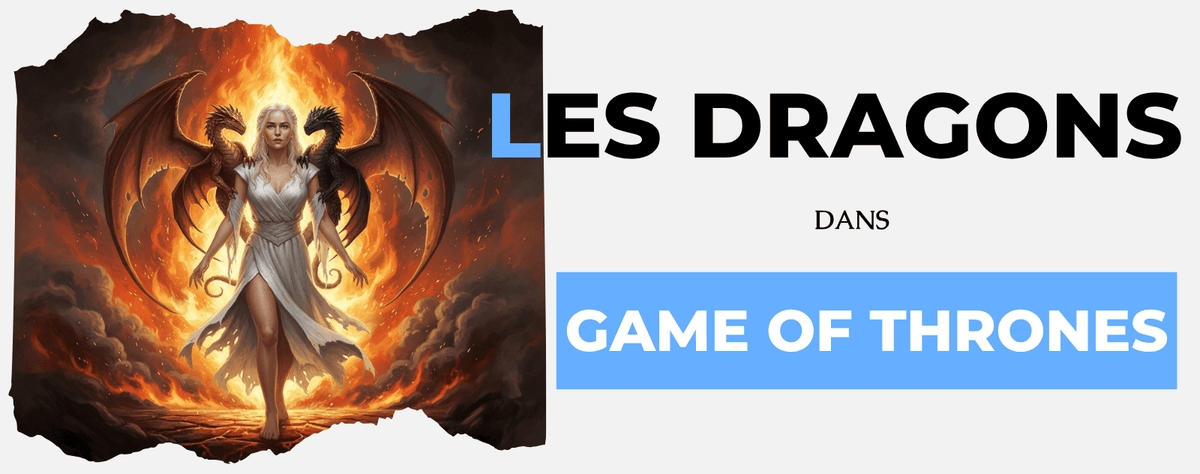
Based on their morphology alone, Drogon , Rhaegal , and Viserion in Game of Thrones look more like wyverns than anything else, but modern fantasy has been breaking old rules for many years.
The Wyvern in Video Games
Aside from heraldry, the Wyvern's greatest domain is the realm of video games. With their formidable silhouettes and ferocious demeanor, these monsters are ideal villains for fantasy games, and they have claimed the lives of many players in hit titles like Final Fantasy, World of Warcraft, Dragonlance, and more recently, Monster Hunter Online and ARK. 🐲

Fire Wyvern
Whether the Fire Wyvern exists and whether the species could truly breathe fire is the subject of intense debate. While the Wyvern certainly doesn't possess an inexhaustible supply of fire like a powerful dragon, some texts describe Wyverns hurling small fireballs at their enemies or at thatched roofs. They were even referred to as "fire drakes" in some medieval bestiaries.

Ice Wyvern
The Ice Wyvern can be light blue and white, with the rare possibility of being green, gray, or black. The membranes of its wings are the same color as its body. They somewhat resemble the Fire Wyvern, but have a more triangular, beak-like upper jaw and a slightly wider, more pointed lower jaw. The Ice Wyvern most closely resembles a bird, with a slender, beak-like snout. They have a prominent forehead with eyebrow-like spikes above each eye. Numerous spikes are present on the head and body, starting on the shoulders, running down the spine, and ending at the tail.

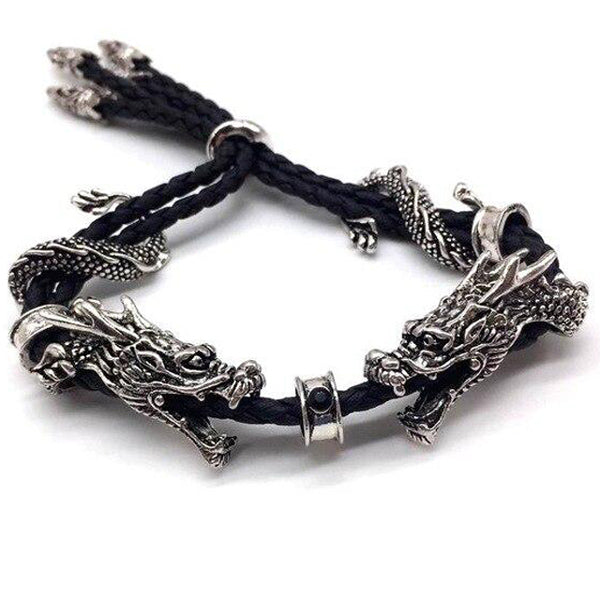
This concludes our article on the Wyvern. This mythological creature remains shrouded in mystery and awe. For comparison, the Wyvern and the dragon might remind you of velociraptors and T-Rex. The Wyvern plays a similar role here; it's a smaller beast, but its body grants it a speed and ferocity that rivals even the capabilities of other dragons. If you want to tame a dragon and harness its virtues and power, grab one of our dragon bracelets right away.




La légende de la Vouivre est à l’origine née du folklore français 🇨🇵 à l’époque du moyen âge, et précisément de Franche-Comté.