


The Different Types of Dragons

In this article, we'll explore the different types of dragons , discussing species, classification, and their associated mythologies. The type of dragon plays a significant role, whether as a god and guardian, or as a monster and powerful enemy, depending on the culture in which this mythical creature is depicted. 🐉
The myth of dragons' existence is supported by a wealth of legends and diverse depictions, disseminated across the various cultures that feature them. The discovery of dinosaur fossils has been proposed as an explanation for this phenomenon, leading these cultures to imagine similar beings. It's also worth noting that dragons in each culture exhibit different appearances and characteristics. In 2005, the Discovery Channel, through its subsidiary Animal Planet, produced a documentary titled "The World of the Dragon: A Fantasy Made Real," which fantastically recreates what the extinction of this supposed species might have looked like. The production is a combination of fiction, hypotheses, and legends, with a general description of possible patterns of animal behavior regarding mating, feeding, and general conduct.

1. Silver Dragon
The silver dragon is among the dragon types that most love and protect humans, having been intertwined with them for a long time. The most famous reptiles of this color are Silvara, who disguised herself as a young elven girl from the Kalanesti tribe, and her sister Gwyneth, the dragon-woman who captured the heart of the knight Huma. Silvana ( the silver dragon ) also appears in Dragonlance, a novel inspired by the famous "Dungeons & Dragons" series, which is available as a role-playing game, video game, and novel.

2. Black Dragon
Black dragons are typically found in swamps, though some have been known to inhabit underground lairs. Ruthless by nature, they have devastated everything in their path, but a black dragon only attacks if the spoils are worthwhile. They proceed with a vigorous offensive, covering the sky in darkness, allowing them to move undetected and strike. The black dragon is the embodiment of evil and destruction. 🖤

3. Ice Dragon
The ice dragon was also called the blue dragon because they lived in extremely cold regions. These dragons were peaceful and had very thick skin, which protected them from any enemy attack; even black dragons hesitated before taking the initiative to attack one of these ice dragons . In some legends, they determine glacial melt and the layers of ice in polar regions (sea ice). Viserion, for example, is not a true ice dragon in "Game of Thrones"; his body is not entirely covered in ice, and he is a wraith, having been reanimated. 🍨

4. The Red Dragon
Red dragons once lived near volcanoes or in very hot places. Normally, a red dragon wouldn't attack unless provoked, but when it did, it was truly aggressive, though not as heartless as black dragons. The flames they breathed were enormous, as they could twist their bodies. 🐲

5. Golden Dragon
The golden dragon is one of the benevolent dragons. These reptiles were shapeshifters, able to transform into any other species. Golden dragons rarely use this power, as they deem it pointless to transform into an inferior species; they are, after all, very majestic dragons. 🐉

6. Green Dragon
Green dragons were a strange race. Some green dragons were very peaceful, others very aggressive. They lived in lush forests or in dark caves. They weren't a strong race, but they were fast and intelligent. A green dragon attacked when it felt threatened, and at the ends of its feet were very sharp claws.

7. White Dragon
The white dragon is classified as a "bad dragon" and is the smallest dragon species. White dragons are adapted to cold regions and live virtually nowhere else. They freeze the place where they imprison their enemies.

8. Bronze Dragon
A fluted and striated crest extends across the cheeks and eyes of a bronze dragon , and its ribs end in curved horns, the largest growing from the top of its head. Straps along its limbs and between its claws aid it in swimming. The scales of a bronze dragon are a dark metallic brown, with some highlights that more closely resemble polished bronze.
The bronze dragon is usually found near large bodies of water. It cares deeply about what happens to humanity. These dragons have two kinds of breath. The first is lightning-fast, and the second is a very foul-smelling gas. Khirsah (Dragonlancer), a member of this species, was the only one in history to agree to carry a dwarf and a kender on his back.

9. European Dragon
This is the most common creature. The European dragon is based on the wind and fire elements, but sometimes their element becomes "ice," an uncommon element. When this happens, European dragons have whitish scales and are called " Nordic Dragons " or " Snow Dragons ." The European dragon has enormous wings, numerous horns, and four powerful legs which, along with its tail, are deadly. It is the most balanced species. They enjoy socializing with others, unlike those with white scales. The European dragon is weak against ice and water, unlike Nordic dragons, which are weak against fire. 🔥

10. Neo-Dragon (4-winged dragon)
They are very rare, extremely rare. Their appearance varies; some have four front legs and two hind legs, four eyes, and even four to six pairs of enormous, fibrous wings. They have no scales; their skin is smooth, and their wings are made of feathers and fur. Little can be said about this type of dragon, as their silhouettes vary so drastically from one to another—in color, size, and body—that it is highly unlikely any two will resemble each other, even remotely. The appearance of this four-winged dragon varies; it is as beautiful as it is fearsome, and people prefer to avoid them at all costs. Their primary element is wind, and their weakness depends on the other element assigned to them.

11. Lernaean Hydra
The Lernaean Hydra was an enormous, ruthless, and tenacious serpent-like monster with multiple heads (the number of heads varies depending on the version), resembling a dragon. It possessed a breath weapon, fangs, and fatally venomous blood. It was the daughter of Typhon and Echidna, and the monster that Heracles had to slay in the second of his twelve labors. Its appearance on the list is due to its striking resemblance to that of a dragon.

12. Copper Dragon
A bronze dragon is slender and sinuous. It has a pair of prominent, backward-swept horns covered in scales, cheek ridges, and jaw frills. Its scales are large, shiny bands or plates, smooth to the touch. Its eyes are a brilliant turquoise. As a bronze dragon ages, its scales take on a greenish hue, like verdigris on an old statue.

Copper dragons live in rocky places. Although they are benevolent, they are overly ambitious dragons. Copper dragons possess two distinct respiratory weapons. The first is a powerful acid breath, and the second is a cone of gas that can halt an enemy's movement by slowing them down.
13. Sea Dragon
Sea dragons have no wings and sometimes no hind legs; they are dragons without the ability to breathe fire. Their long, slippery bodies, like those of sea serpents, are covered in scales, usually blue and green, perfect for camouflage. The most famous species is the Leviathan, the largest sea serpent, which became infamous for effortlessly creating tsunamis.

Sea dragons are naturally cold and cautious, highly intelligent, and swift in the water. They can hold their breath for extended periods. On land, they are less adept, but not necessarily clumsy. Their primary element is water, though they can also control ice. They are weak against earth and grass types.
14. Asian Dragon
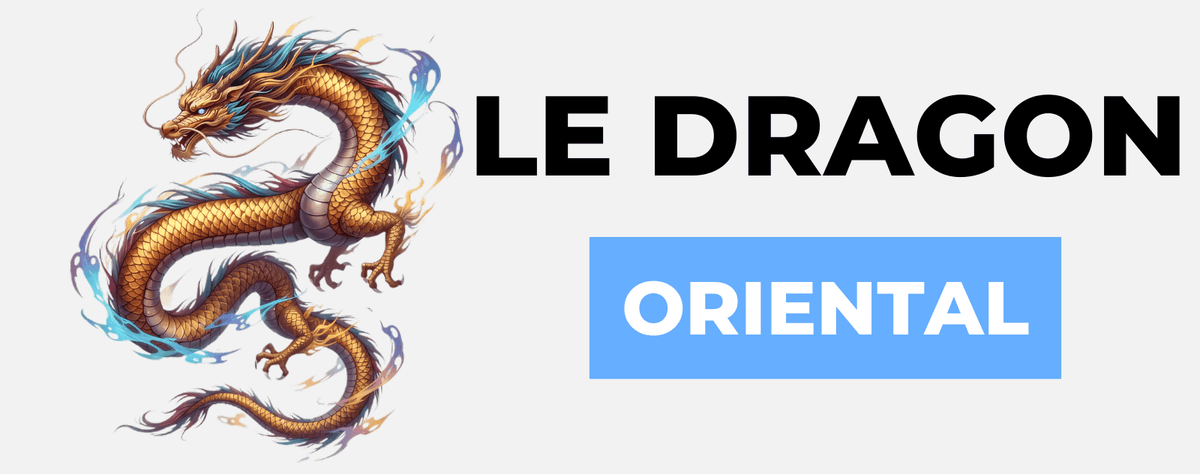
Asian dragons are generally symbols of good fortune or health in some parts of Asia, and are also revered. Asian dragons are considered mythical weather regulators, particularly of rain and water. The Asian dragon is a composite of several animals: the head of a horse or camel, the ears of an ox, the neck or body of a snake, the scales of a fish, the paws of a tiger, and the talons of an eagle. Common dragons have three or four claws, while the imperial dragon has five. Asian dragons can become invisible at will. They often hang a pearl around their neck or carry it in their paw, symbolizing the sun and carrying its benevolent energy. They are both companions and teachers.

The Asian dragon is found in many places, depending on its nature. The subterranean dragon is responsible for guarding treasure, precious metals, and jewels found deep within the earth. The earth dragon , or lord of the river, regulates and maintains water sources, altering their course as needed. The divine dragon , or lord of weather, shapes clouds, wind, and rain. Finally, the celestial dragon protects the heavens and the homes of the gods.

Unlike most types of dragons, Asian dragons don't have wings (in fact, the Ying-Lung dragons were the only ones that did). So how did these dragons manage to fly? Well, the people of the East saw dragons as magical beings; they flew "by magic." Most Asian dragons could shapeshift. They could take the form of various creatures, such as beasts or humans. When they did this, they were always the most beautiful and kindest of all species. 🐉
15. Brass Dragon
The brass dragon is a type of dragon that lives in sandy areas. They are very loud and flashy, and tend to be quite selfish. They talk without thinking and travel with adventurers to hear them communicate. Their breath can make you sleepy or frighten you, or both, and brass dragons are among the types of dragons that wield magic.

16. Wyvern
Wyverns , also known as Vouivre or heraldic dragons, are creatures from medieval mythology originating in Europe. Shaped like winged reptiles, they are of a lower order than dragons. The wyvern has only two hind legs and two wings, sometimes tipped with claws. Its eyes are a vivid red. Its tail has a stinger very similar to that of a scorpion. In combat, the wyvern uses its stinger, which it wields with great agility. This stinger injects venom, from which few victims survive. They are of relatively low intelligence, and their flight is not as agile as that of a dragon.

17. Mountain Dragon
The mountain dragon is known as such because in medieval times it primarily inhabited mountains and other remote places. However, its name is not very appropriate as a type of dragon.

18. Nature's Dragon
The nature dragon lives in dense woods and bamboo forests. These creatures inherited the enormous, sinuous body of their marine predecessor. Thanks to this, they were able to move easily through the jungle vegetation. This type of dragon also retained the ability to swim. Thus, in the event of an excessively hot season or a forest fire, they can always take refuge in rivers.

19. Marsupial Dragon
This is not a very common type of dragon; also called a marsupial dragon, it resides only in Australia. The marsupial dragon 's hind legs possess remarkable strength and agility. Its appearance is very similar to that of a kangaroo, and it uses its front legs only for support or rest, as they are much smaller. Its tail is both strong and flexible, making it its greatest weapon. It is not advisable to attack them when they are on their backs. They have small ears and horns on their heads. They are completely streamlined, and marsupial dragons are generally cheerful and hyperactive. Their primary elements are fire and earth; they are weak against wind.

20. Lindworm
A lindworm (called lindorm in Scandinavia and Lindwurm in Germany, and also linnorm, dreki , or ormr ) is composed of two Germanic words meaning "trapping serpent." It is a large type of dragon-serpent in European mythology and folklore. Some legends say it had two legs, while others say it had no legs at all. In Norse and Germanic folklore, the lindworm is similar to the wyvern, although it lacks wings. These giant worms were supposedly very long and ate livestock and corpses, invaded abbeys, and devoured the dead in cemeteries.

21. Jaculus Dragon
The jaculus dragon is a legless, winged serpent/dragon. It is said to have originated in the frankincense trees of Arabia. When the ancient Arabs came to collect the precious spices, the jaculus would attack them. The jaculus dragon had a tail that ended in a sharp arrowhead, like some dragons. The jaculus would fall with great speed from the trees, using its tail like a javelin, piercing and driving its prey into the forest. This type of dragon has been seen in the African bush, the Middle East, and even the British Isles.

22. Oriental Dragon
Lung is the term used by the Chinese to refer to the different types of Eastern dragons they possess. There are nine types of Chinese imperial dragons (nine because it's a lucky number): the horned dragon Qiu Lung, the celestial dragon Tian Lung, the spirit dragon Sheng Lung who controls rain, wind, and floods, the earth dragon Ti-Lung, the hidden treasure dragon Fucan Lung, the water dragon Wang-Lung, the coiled dragon Pan Lung, the yellow dragon Huang Lung, and the king dragon Ying Lung. These imperial dragons have five claws, while Korean dragons have four and Japanese dragons have three. 🐉
According to legend, dragons originated in China, and the farther they traveled, the more claws they lost until they could no longer continue their journey. Eastern dragons tend to be more tame, gentler, and more helpful than Western dragons. They can be born in two ways: from a dragon's egg or from a carp that jumps over the dragon's gate.

23. Naga
Naga is the Sanskrit and Pali word for certain deities and beings belonging to Hinduism and Buddhism, depicted as very large serpents. The use of the term Naga is often ambiguous, as the word can also refer, in similar contexts, to one of the many human tribes known or nicknamed "Nāga," elephants, and common snakes, particularly the king cobra and the Indian cobra, the latter still being called Nāg in Hindi and other Indian languages. A female Nāga is a Nāgi.

Nagas are depicted in various ways. Some have a serpent's body and a human torso or head, others have a human body surrounded by numerous serpents emerging from the hip or shoulders, and still others have the lower part of a serpent from which several heads emerge, somewhat like hydras. 🐍
24. Dragon Ryujin
The Ryu dragon, also known as Tatsu, originates from Japan. It is a large, fantastical, serpentine creature, resembling the Chinese Lung dragon and the Korean Yong dragon. It differs from other dragons in that it has only three toes on each foot. The Ryujin dragon is depicted without wings, covered in scales, with short legs and horns.

It is generally associated with water, clouds, or the sky. There are six types of Japanese dragons:
- Sui-Riu is the Japanese dragon king. Responsible for rain, sometimes known as the "rain dragon".
- Han-Riu is a Japanese striped dragon. He is about forty feet long, yet he has never reached the sky.
- Ri-Riu , a rather unknown dragon, has exceptional eyesight (compared to other dragons, of course).
- Ka-Riu , one of the smallest dragons, was only seven feet long. He was fiercely red.
- Hai-riyo is a Japanese "dragon-bird". It was the "developed" form of a dragon.
- Fuku Riu is a lucky dragon.
25. Amphisbaena Dragon
The amphisbaena dragon (Amphisbaena in Greek), from the Greek words amphis, meaning "two directions," and baena, meaning "to go," also known as the mother of ants, is an ant-eating serpent with a head at each end of its body. According to Greek mythology, the amphisbaena emerged from the blood flowing from Medusa's head as Perseus walked across the Libyan desert carrying her in his hand. The amphisbaena is described as a venomous creature with two heads and a serpentine body. 🐲

However, medieval drawings depict it with two or more scaly feet, specifically chicken legs, and feathered wings. Some portray the creature with horns, and as a dragon with a serpent's head at the end of its tail, with small, round ears. Others claim that the two "necks" are of equal length and that the rear head cannot be identified. Many descriptions of the amphisbaena say that its eyes shine like candles or lightning bolts. Amphisbaena heads have two distinct spirits, and they can be separated into two halves or joined into a single body. 🐍
26. Amphipterous
The term " Amphiptera " is generally applied to feathered dragons or serpents. Varieties of this creature typically lacked legs, possessing only a pair of wings. Amphipteres were reputed to possess great wisdom or knowledge, along with a corresponding amount of energy. Many were also believed to be guardians of treasure. As in dragon mythology, special qualities were attributed to body parts. One such feature was the eyes, which were said to have a hypnotic effect on anyone who saw them.

The Amphiptere is the only type of American dragon, having only its wings as limbs. It is distributed throughout the continent and there are three subspecies: the northern subspecies, the southern subspecies and the southern subspecies.
- Draco americanus tex , the northern dragon, known as the winged serpent, has moth-like wings and a body entirely covered in skin.
- Draco americanus mex , the Central American dragon, known as the feathered serpent, has feathers all over its body, and is associated with Quetzalcoatl, the Aztec deity.
- Draco americanus incognito , the dragon inhabiting the south, is largely unknown because it can camouflage itself in almost any environment.
27. Prehistoric Dragon
The dragons of the Cretaceous period were the largest flying animals that ever existed. These ancient creatures descended from a group of aquatic and semi-aquatic reptiles that inhabited the seabed 200 million years ago. Originally, the land-based species stood on all four limbs and were unable to fly or breathe fire. One of these species, however, developed the ability to walk on its two hind legs, allowing for the later evolution of its forelimbs, which would eventually become wings.

At this stage, for which we have no fossil record, dragons began to utilize bacteria in their intestines to produce hydrogen. This advantage allowed them to overcome the obstacle of weight (present, for example, in birds and bats) and led them to become the largest flying creature of all time. The prehistoric dragon even competed with one of the era's apex predators, Tyrannosaurus Rex. Later, dragons began ingesting inorganic minerals like platinum, which acted as catalysts for the hydrogen previously stored in their bladders. In this way, the powerful fire-breathing weapon was incorporated into the dragons' armor. The prehistoric dragon was born.
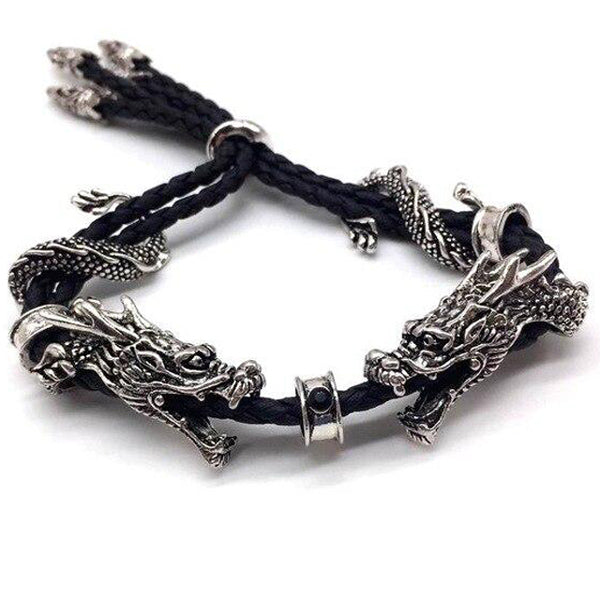
This article will be updated regularly, so feel free to tell us your favorite type of dragon in the comments. And if you're still a dragon fan, take a look at our collection of dragon necklaces —our whimsical jewelry pieces imbued with mythical powers.


trop bien, je garde cette page pour des futurs écrits.
bon courage pour la suite.
Merci
woaw
Merci pour cet article très complet. Cela pourrait bien m’aider dans un projet futur.